The Definitive Guide to Performance Tuning in Forza Motorsport
Welcome to the art of tuning. In Forza Motorsport, building a fast car is easy, but building a balanced car requires a blend of logic, physics, and a little bit of dark magic.
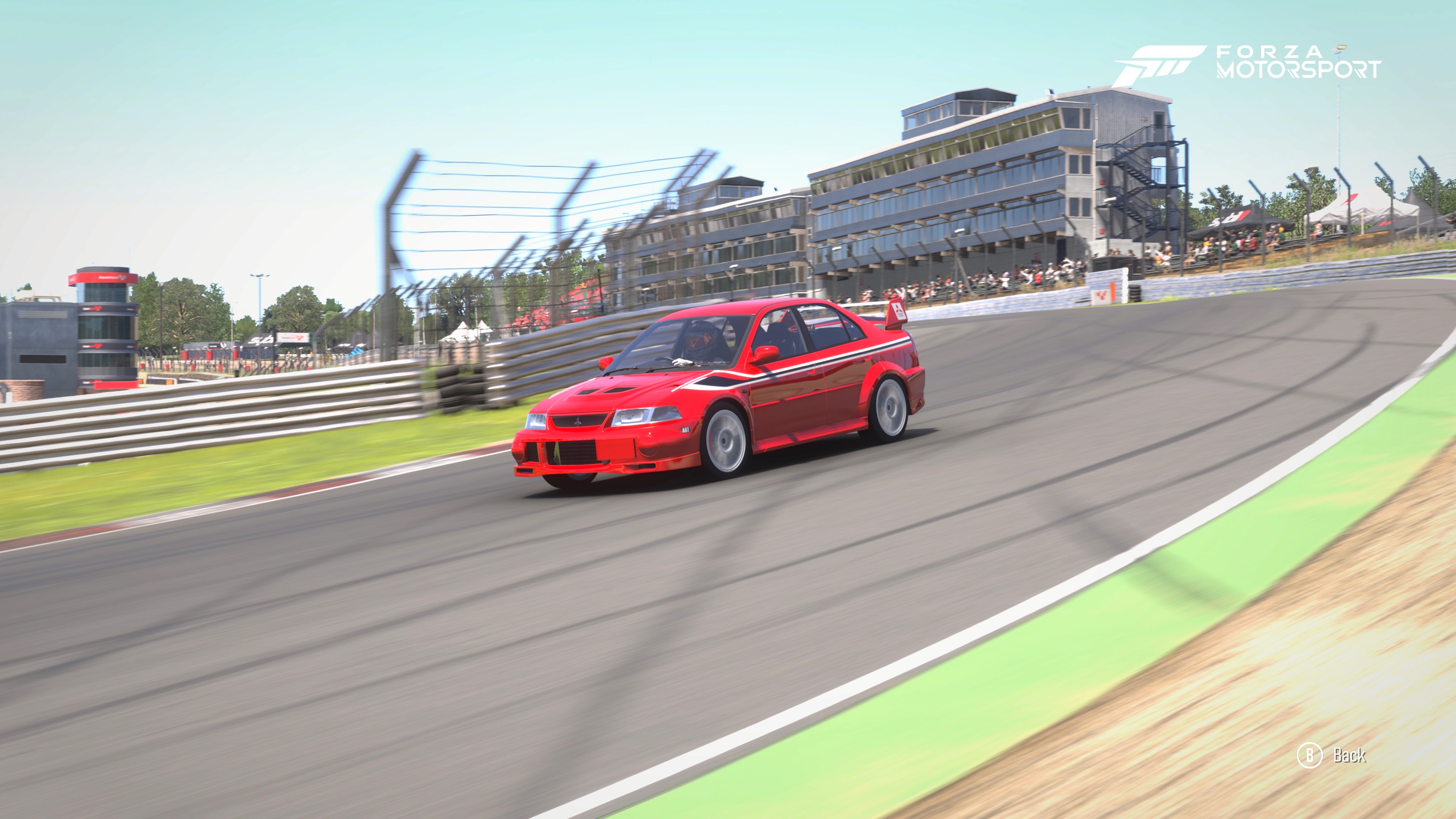
So, you’ve spent the credits, bolted on the race brakes, and performed the ultimate sacrilege: converting a legendary Mitsubishi Lancer Evo VI from AWD to a tail-happy RWD monster. You take it to Brands Hatch, dive into Paddock Hill Bend, and... the back end overtakes the front before you’ve even seen the apex. Welcome to the art of tuning. In Forza Motorsport, building a fast car is easy, but building a balanced car requires a blend of logic, physics, and a little bit of dark magic. To tame a front-heavy RWD conversion, you need to move beyond simple upgrades and master the sliders. Here is how to stop "guessing" the setup and start engineering a winner. The Top-Down Philosophy: A Logical Order Don't fall into the trap of "circular tuning," where you tweak the springs to fix a problem actually caused by the differential. A driver should tune based on "feel" in a specific sequence: The Foundations (Brakes & Diff): Establish stability before you do anything else. The Skeleton (ARBs): Set the general cornering balance. The Muscle (Anti-Geometry & Roll Center): Control how the body moves under load. The Footprint (Alignment): Optimize the tire contact patch. The Heartbeat (Springs & Damping): Fine-tune the speed of transitions. 1. Foundations: Stopping and Going Before you can go fast, you have to ensure the car doesn't try to kill you the moment you lift off the gas. Brake Balance: For our technical lap at Brands Hatch, set this to roughly 48% (Rearward). This helps the car "pivot" into the Druids hairpin without locking the fronts. The Differential: This is your best friend in a RWD conversion. Acceleration %: High values lock the wheels for better drive, but be careful of "power-oversteer." Deceleration %: This is the secret to fixing Snap Oversteer. Increasing this to 30–40% keeps the rear wheels spinning together when you lift off, resisting that terrifying "pivot" when the engine weight hurls forward. 2. Anti-Roll Bars (ARBs): The Quick Fix ARBs are the easiest way to manipulate balance. Want more turn-in? Stiffen the rear. Car sliding out too much at Graham Hill Bend? Stiffen the front. If the car feels like it’s "falling over" in the middle of a high-G turn, stiffen both to keep the platform level. 3. Advanced Physics: Roll Center & Anti-Geometry Forza has introduced advanced geometry that decouples mechanical grip from weight transfer. This is a game-changer for front-heavy cars. Roll Center Offset: Think of this as the "lever" effect. A Higher Offset (+) brings the pivot point closer to the Center of Gravity, making the steering feel instant. It’s the perfect cure for a "lazy" turn-in at Paddock Hill. Anti-Dive (Front): Increase this to stop the nose from diving under heavy braking. It keeps the car flatter and prevents the rear end from getting dangerously light on entry. Anti-Squat (Rear): While high Anti-Squat makes a car feel snappy, decreasing it allows the Evo to "crouch" on its haunches, using its own weight to smash the tires into the asphalt for maximum traction out of Clearways. 4. Alignment: The Footprint Now we optimize the contact patch. You want the tire to be perfectly flat ($0.0^{\circ}$) at the apex of the turn. Camber: Set the Front to -2.0 and Rear to -1.5. This ensures that as the car leans, the tire stays pressed firmly against the track. Toe: This is crucial for stability. Use Toe-Out (Front +) for a "darty," aggressive turn-in, but always use Toe-In (Rear -) at about -0.1 to -0.2. This forces the rear tires to follow the front, acting as a secondary insurance policy against snap oversteer. Caster: Crank this up to 6.0 or 7.0. It adds straight-line stability and provides "dynamic" camber the more you turn the wheel. 5. Springs & Damping: The Speed of Weight Finally, we manage the "speed" of the car's movements. Springs: You want them soft enough to soak up the kerbs, but stiff enough to support that heavy front engine. Keep the fronts stiffer than the rears to maintain a level ride. Damping: Rebound controls the expansion; Bump controls the compression. If the car "snaps" back after a weight shift, increase Rear Rebound. This slows down the rate at which the rear suspension extends, keeping you glued to the road. (Rule of thumb: Keep Bump at 50-70% of your Rebound value). The "Evo at Brands" Strategy Summary Tuning isn't about finding one "magic" number; it's about balancing the trade-offs. By following this logical path, you take the guesswork out of the garage and put the performance on the pavement. Now, get back out to the Brabham Straight and see what that Evo can really do!